November 17, 2026
KALA 06: The Eccentric Tradition in Kamasan Art
KALA 06: The Eccentric Tradition in Kamasan Art
By Marlowe Bandem & Andika Devara Loeis
When it comes to Kamasan, Professor Adrian Vickers has nearly five decades of memories to draw on. Speaking at SAKA Museum, he recalled how a visit to Mangku Mura's home could easily become five hours of conversation: stories within stories, shared by a painter and temple priest whose knowledge of Balinese narrative seemed inexhaustible. Years later, he found the same generosity in conversations with Mura's daughter, Mangku Muriati. A visit to her home, he suggested with affection, also meant setting aside plenty of time.
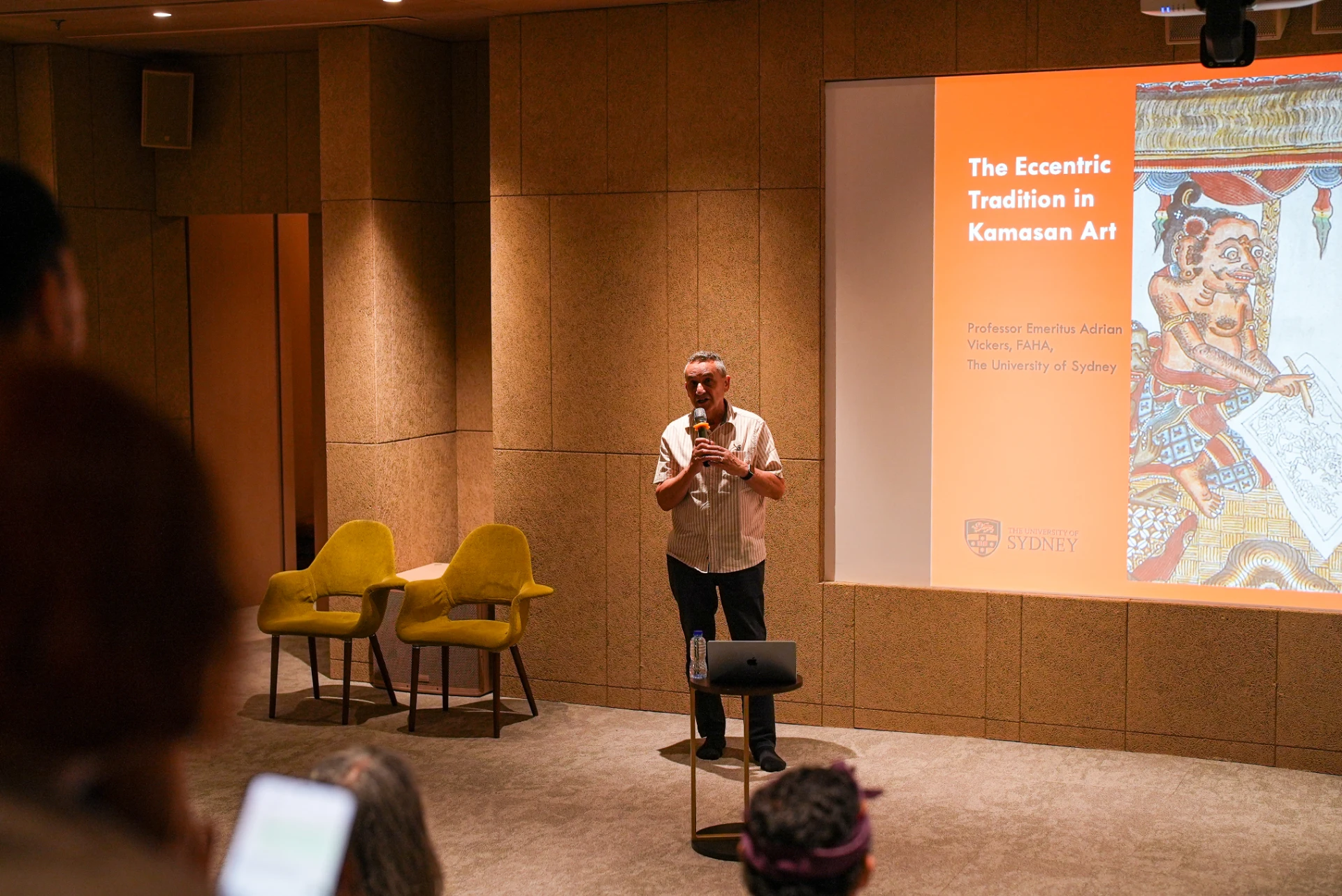
Mangku Mura was one of the defining figures in twentieth-century Kamasan painting. Trained in Banjar Siku, Kamasan, he helped restore the ceiling panels at the Kertha Gosa complex in Klungkung in the 1960s, and his work eventually entered museum collections abroad. To Adrian, he was also a generous teacher who made time to explain what his paintings contained. That connection between the art and the people who made it shaped KALA 06, held on Thursday, 29 October 2026 alongside the exhibition KAMASAN: The Noble Tradition of Balinese Painting. Adrian's talk, titled The Eccentric Tradition in Kamasan Art, made a simple but striking claim: a painting style most visitors assume has stayed exactly the same for five centuries has actually survived by constantly producing individual, sometimes eccentric, hands within it.
KALA, SAKA's conversation series named for Knowledge, Artistry, Legacy and Awareness, now in its sixth edition, built to let cultural practitioners, researchers, and audiences learn from one another. This session did that through a talk, a discussion, and a walk through the exhibition.
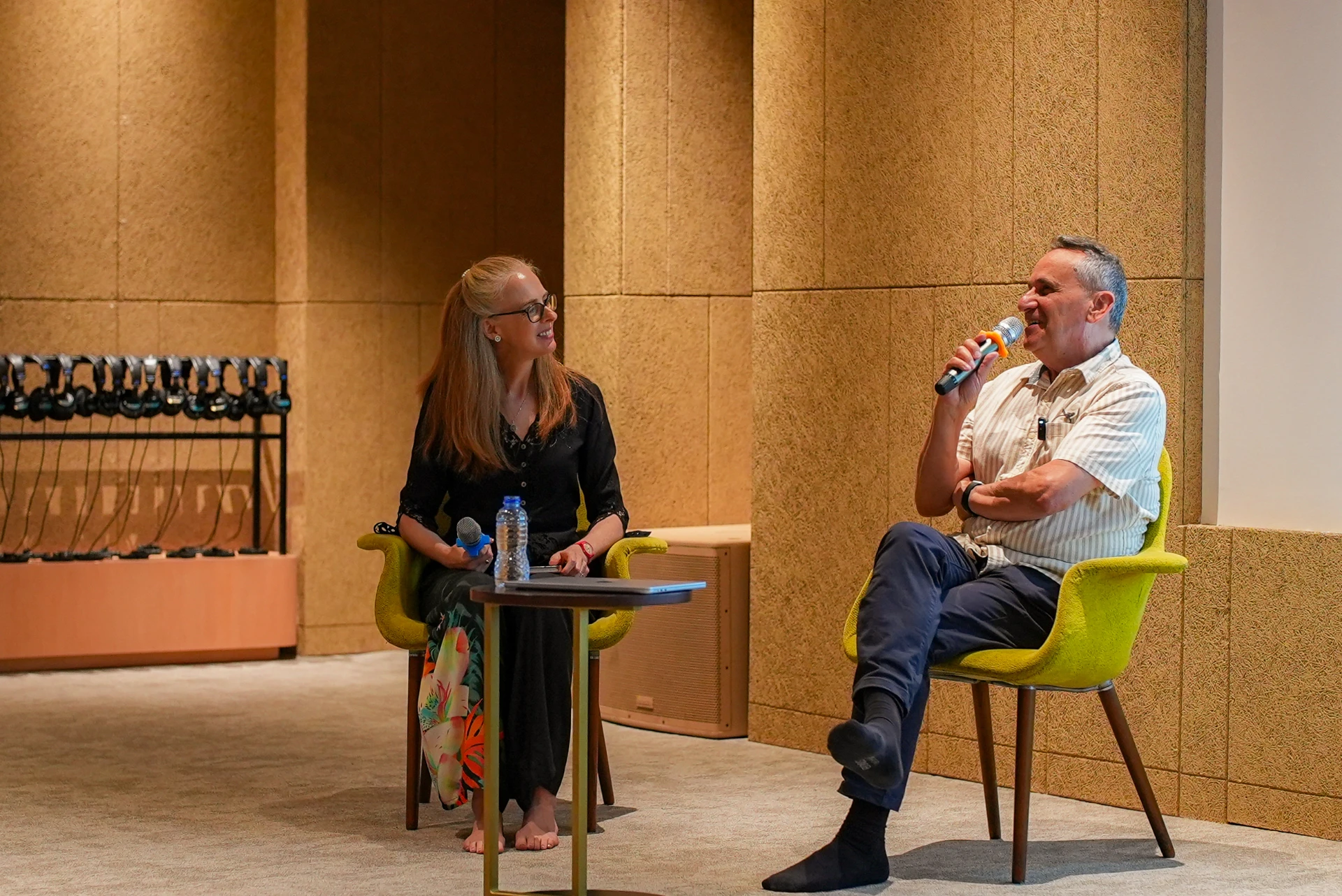
Welcoming Adrian was the afternoon's moderator, SAKA Museum Director Dr. Judith E. Bosnak. Their acquaintance began about nine years earlier in Mexico City, at a seminar on Miguel Covarrubias's Island of Bali; Judith had already read Adrian's Bali: A Paradise Created, and their shared interest in Bali and Indonesia gave them much to discuss. In Bali, friends call him Bli Made Kamasan.
An Emeritus Professor of Southeast Asian Studies at the University of Sydney and a Fellow of the Australian Academy of the Humanities, Adrian has devoted much of his career to Indonesian history and art. Alongside Bali: A Paradise Created, his books include A History of Modern Indonesia and Balinese Art: Paintings and Drawings of Bali 1800–2010. Judith described his writing as an important reference for the exhibition.
The exhibition brings together curators Farah Wardani and Made Chandra. Farah is an art historian, curator, and writer who previously directed the Indonesian Visual Art Archive in Yogyakarta and served as Assistant Director of the Resource Centre at National Gallery Singapore. Chandra approaches Kamasan as a practicing artist, and his research into how the style's figures and symbols communicate meaning helped shape the exhibition's explanations of technique. Together, they follow Kamasan through its ceremonial settings and the families who sustain it, giving particular attention to women's contributions and younger artists' interpretations. Judith returned to this in her opening remarks, noting that supporting living traditions and making room for women whose work has often gone less recognised is central to SAKA's approach.
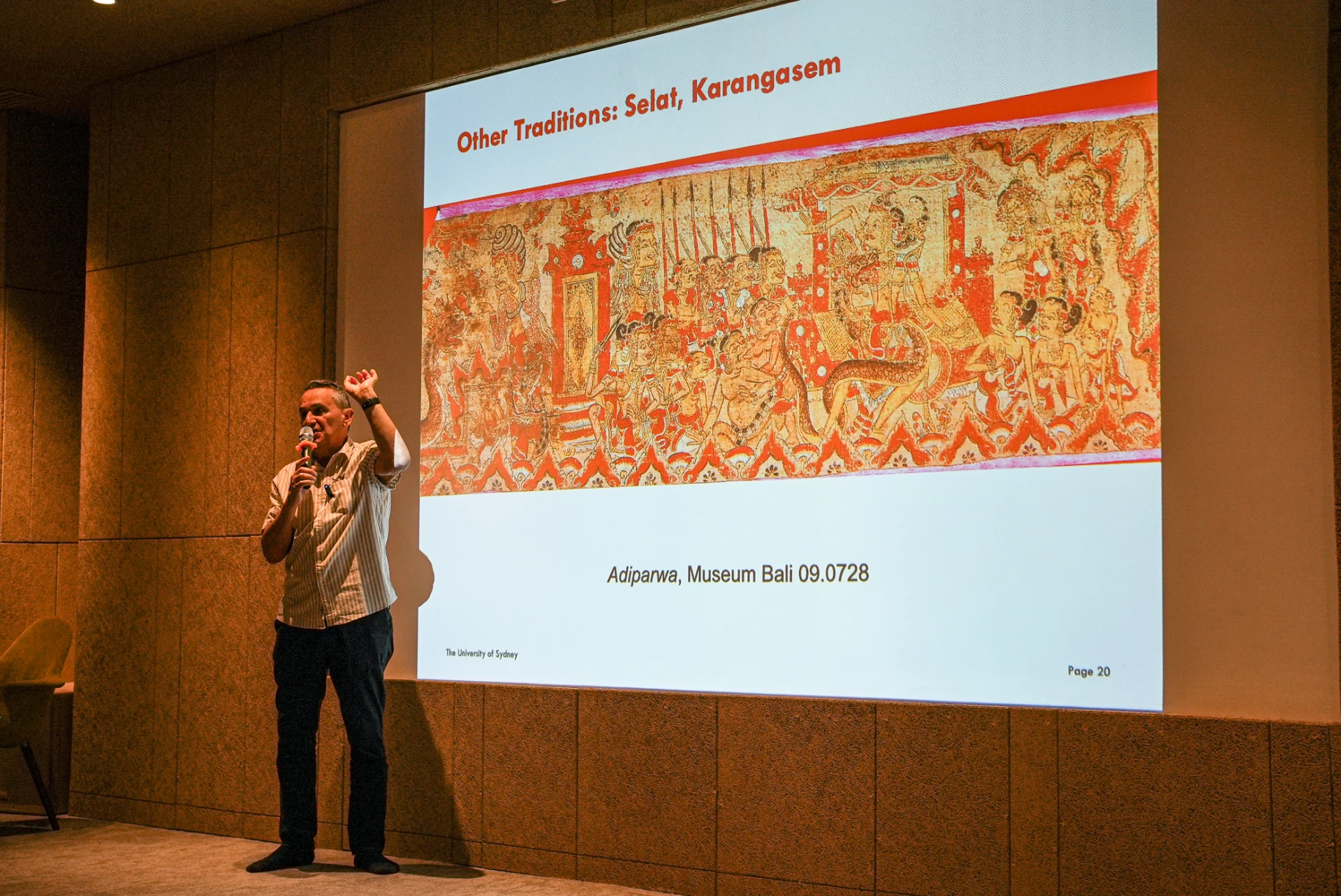
Adrian's interest in Kamasan goes back to a school excursion to Indonesia at fourteen, and later, studying Indonesian art history at the University of Sydney. By the late 1970s he was living in Kamasan itself, in the household of Nyoman Mandra's older brother. Mandra, one of the village's leading classical painters, taught him to see the small differences that distinguish one artist's hand from another, sometimes correcting identifications in published research. From Mandra's home in Banjar Sangging, Adrian would walk to Banjar Siku to visit Mura, whom he had first heard of through the anthropologist Anthony Forge. Mandra sharpened his eye for form; Mura drew him further into the stories.
Those years of walking between two houses gave Adrian his argument: that a tradition usually described as fixed and anonymous in fact runs on individual style, passed hand to hand. Before the mid-nineteenth century, no artist's name survives attached to a Kamasan painting at all. But oral history and family genealogy let researchers attribute the earliest known example, a depiction of the story of Lubdaka, a hunter whose accidental night of wakefulness becomes an unintentional act of devotion to Siwa, to an artist called Modara, active around the 1840s. In the detail Adrian showed, a devotee kneels before an elaborately adorned deity. "I love this particular thing," he said. "It talks about devotion to Shiva, but it seems to be a moment where we have the possibility that this is actually a self-portrait by Modara: the artist intervening and showing his devotion in this work."
A generation later came Kat Lui, an artist who was prosecuted by the Dutch colonial authorities for obscenity over paintings he made for tourists in the 1930s. ; he served time in jail for it, even as Dutch collectors rushed to buy up every confiscated work they could find. "Kat Lui is part of what I would call the eccentric tradition in Kamasan art," Adrian said. "One of his main students was Mangku Mura." Asked later to compare Mura with his equally celebrated contemporary, Nyoman Mandra, Adrian put the difference simply: "Nyoman Mandra is interesting because he was very conventional, but also very different: he emphasized the importance of classic proportions, what made a composition significant. Mangku Mura was much more eccentric, in the Indonesian sense: he wanted to stretch some of the limits of tradition."
That eccentricity shows up in the details. In Mura's version of the Buddhist tale of Sutasoma (in which a prince offers himself to a threatening naga, or serpent being, and overcomes it through self-sacrifice), Adrian pointed to pink tones and a turbulent background of storm and tempest that set it apart from earlier paintings of the same scene. Small choices like these made an individual visible inside a story that had been told, in roughly the same way, for generations.
Mura passed his knowledge on to his children, including Mangku Muriati, who began helping in his studio as a child, later studied art at Udayana University, and eventually succeeded him as a temple priest as well as a painter. Where her father kept religious meaning mostly beneath the surface of his work, Muriati has pulled it into the open. Her Puputan Klungkung, depicting the Dutch attack on Klungkung in 1908, draws on a painting her father made from stories passed down in the family; more recently, she has reworked Hinduism's myth of four cosmic ages around Bali's floods, folding the ancient and the everyday into the same frame.
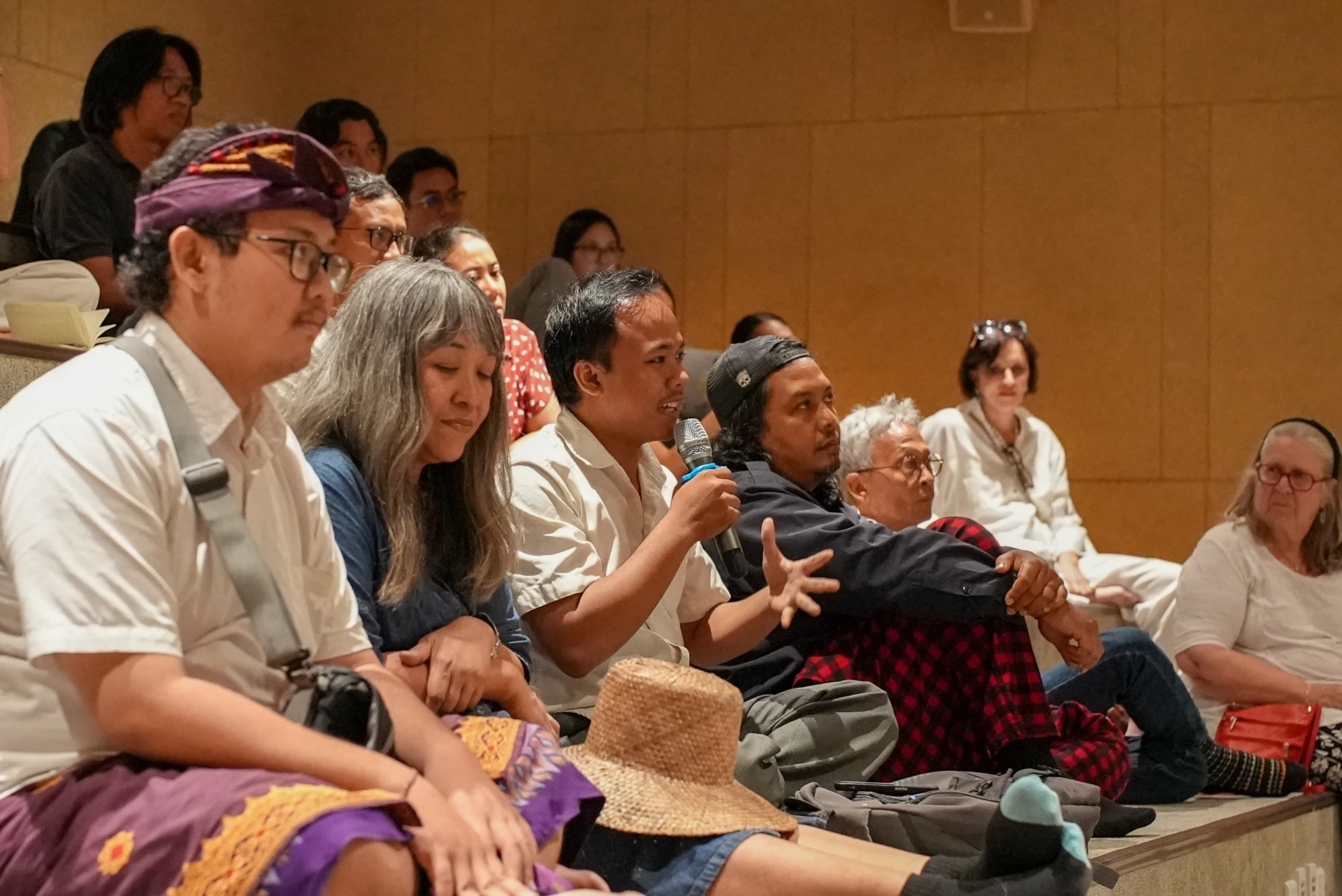
The Q&A that followed returned more than once to questions about change. One audience member asked why Panji stories, once prominent in Kamasan painting, had become less familiar. Adrian traced the decline partly to shifts in royal patronage under colonial rule, a point the exhibition's curators echoed, noting how hard it had been to find even one Kamasan Panji painting to borrow, apart from one by Ni Made Suciarmi. Suciarmi, the daughter of a painter and shadow-puppet performer, was among the first women to gain recognition as a Kamasan painter under her own name, a fact that underlined Judith's opening point about women's contributions still deserving fuller attention.
Another question, from an artist named Gde Eka Wikannanda, known as Wikan, played on the wordplay built into the village's own name: Kamasan, keemasan (a golden age), and kemasan (packaging), and asked how commercialisation might shape the tradition's future. Adrian acknowledged that artists need to sell their work to get by, but said the dedication he had seen in Mandra and Mura went beyond commercial concern, and that he saw it continuing in younger painters today, Wikan among them. "What I really like about how Kamasan artists are working," he said, "is that they're flexible, they're innovative, but they still stay rooted in tradition."
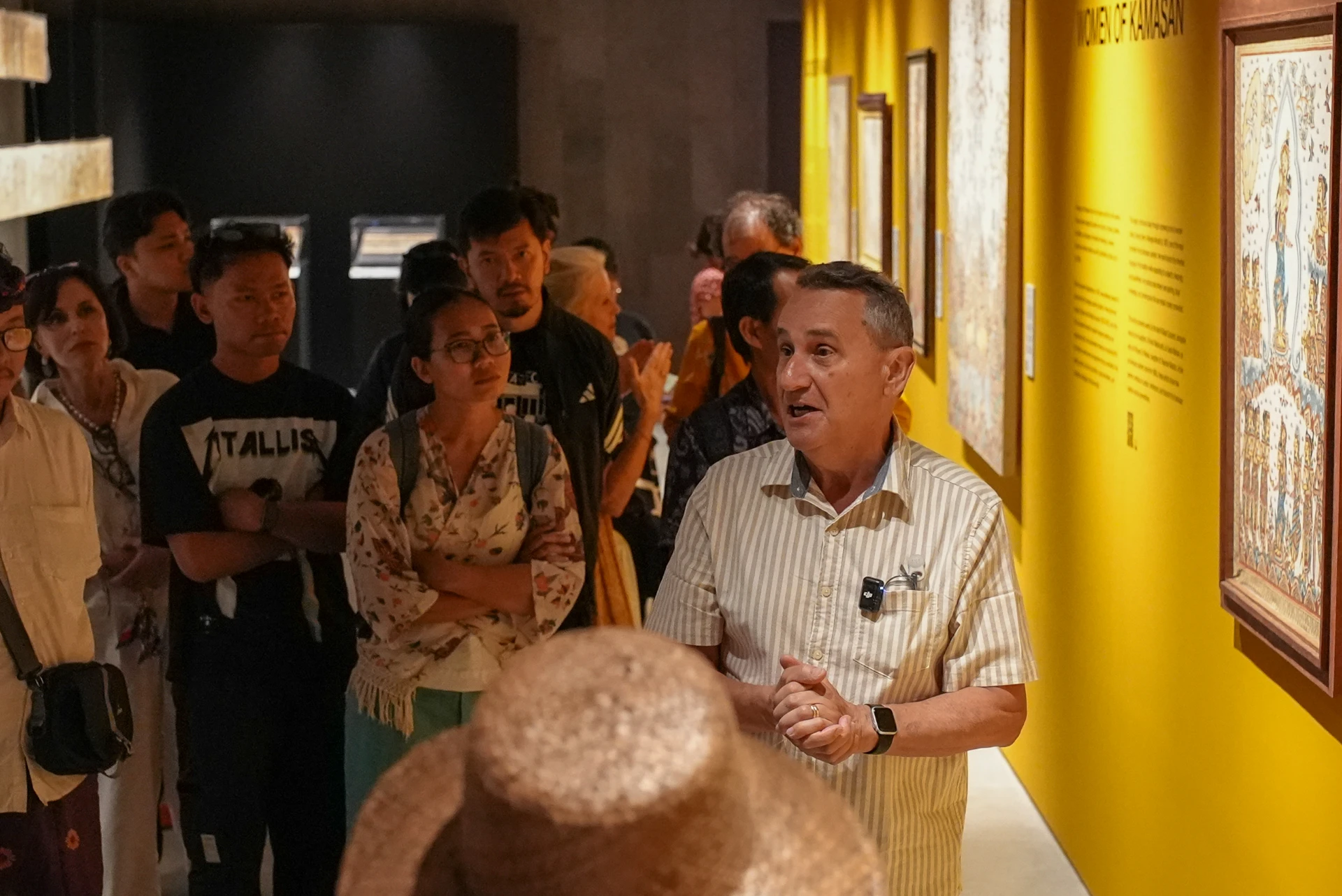
The afternoon then moved into the exhibition hall, where Judith had invited everyone to look for the individuality Adrian described in the paintings themselves. In front of Suciarmi's work, he recounted an episode from the Malat, the Balinese cycle of Panji stories, pointing out a scene of festivities (dancing, a wayang performance) near the story's end. He spent the longest stretch of time in front of Muriati's paintings: women at work, the isolation of the pandemic years, and a scene of the capture of Prince Diponegoro, its Dutch soldiers drawn the way Balinese artists have long drawn colonizers, as faintly demonic figures. For those who wanted to hear more in Mangku Muriati’s words, he pointed them toward her interview, playing in the gallery.
KAMASAN: The Noble Tradition of Balinese Painting remains on view at SAKA Museum, AYANA Bali, Jimbaran until 30 May 2027. The museum is open daily from 10:00 to 18:00 WITA. Last admission at 17:30. Plan your visit here.