.jpg)
Walk through the village lanes of Kamasan, where sacred teachings, courtly stories, and knowledge from the past take form in painting. Passed from one generation to the next, this living tradition continues in the work of Kamasan artists today.
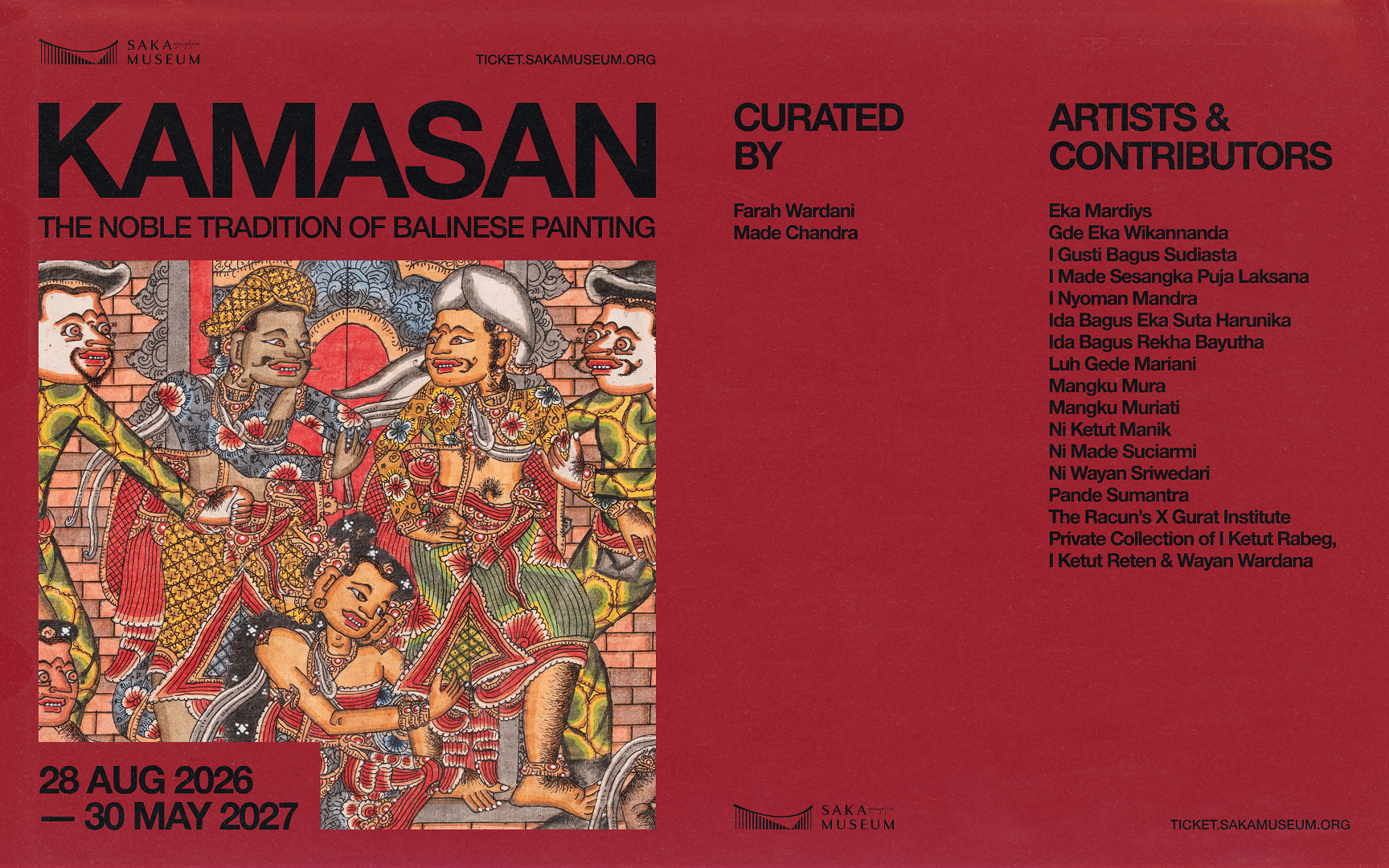
In Kamasan, a village about 43 kilometers east of Denpasar, a visual language emerged and has endured for centuries. Kamasan painting flourished during the Gelgel kingdom in the 16th century and continued to develop under the patronage of courts in Klungkung. Artists transformed stories from the Ramayana, Mahabharata, Sutasoma, Panji, and Tantri into paintings. In doing so, they followed the inherited conventions of Kamasan wayang painting, including the depiction of figures (wong-wongan), gestures, and ornament. The colors were produced from minerals, plants, and soot.
Kamasan is a close-knit community where many painters live and work as neighbors. Knowledge passes from parent to child, master to apprentice, and religious leader to artist. Recognized as Indonesian Intangible Cultural Heritage in 2015, the tradition continues through families, teachers, sanggar, and banjar communities. Learning Kamasan painting means earning the community’s trust while mastering and sustaining its techniques.
This visual language and classical painting style continue to evolve. Techniques once used to depict gods and epics now engage with contemporary life, including polluted seas, the COVID-19 pandemic, women entering new professions, and Indonesian history retold from a Balinese perspective.
The exhibition brings together 34 works by 17 artists and contributors. See a nine-meter ider-ider depicting the heroic story of the Bharatayuddha. Once hung along the edge of a temple roof, it surrounded worshippers with messages of virtue and courage. Encounter langsé, ritual curtains once used to screen sacred objects and conceal performers before they entered ceremonial spaces. Kamasan works remain part of ritual life while also developing through museums, galleries, and the practices of artists whose names are becoming increasingly recognized. This expansion into new contexts opens space for a younger generation to explore Kamasan’s visual language through different materials, forms, and subjects.
Look closely at I Nyoman Mandra’s Rahwana Merusak Kailasa, in which the demon king Rahwana tries to lift Siwa’s sacred mountain and is trapped beneath it. Discover Mangku Mura’s Gugur Bisma, depicting the fall of one of the Mahabharata’s most revered elders. See how Mangku Muriati applies Kamasan’s classical language to the lives of working women, the wail of ambulance sirens, threats of environmental damage, and colonial history.
Meet also a new generation of artists. One uses vivid neon colors and markers on lengths of raw cotton hung like ritual curtains. Another maps the human body as a microcosm filled with sacred script. A third works in charcoal on bark paper to honor a master painter from an earlier generation. Created largely within the past five years, these works inherit the tradition while opening new creative possibilities.
Learning spaces throughout the exhibition invite visitors to explore Kamasan painting more deeply. Trace a thousand years of Balinese art on a historical timeline, from an 11th-century inscription to artists working today. Learn to read Kamasan’s visual system: how facial features identify characters, gestures move the story forward, and pedum karang divides the painting into fields that carry different meanings. Discover the nuances of Kamasan’s warm earth-toned palette, then follow the stories that continue to live through its images.
Visit SAKA Museum and experience Kamasan painting across generations, from works created for ritual spaces to the explorations of artists today.
.jpg)

