August 12, 2026
Teachers’ Day at SAKA Museum: Learning Beyond the Classroom

By Marlowe Bandem & Andika Devara Loeis
A museum is, at heart, a place of education. It gathers objects, images, and stories not simply to display them, but to help people encounter knowledge in ways that invite questioning and reflection. For SAKA Museum, that purpose extends most naturally to the people who make learning their life's work: teachers.
On July 3, 2026, SAKA Museum welcomed educators from schools and learning institutions across Denpasar and Badung for a special edition of Community Day dedicated to teachers. The invitation carried a clear intention. SAKA hopes to be of use to every kind of learning community, and teachers are among its most important partners in that work. Just as importantly, the museum wanted to listen, to understand what schools need and how it might help enrich the learning experience.
That two-way spirit shaped the day. More than fifty teachers, working across primary and secondary education and from public to international-curriculum schools, spent the day not only discovering Balinese culture but also sharing how such encounters might take root in their classrooms.
Opened to the public in 2024, SAKA Museum explores the Balinese calendar system, ritual cosmology, ecological knowledge, and contemporary expression as living systems that continue to shape Bali today. For teachers, the museum offers something a textbook cannot: abstract ideas become spatial, sensory, and immediate.
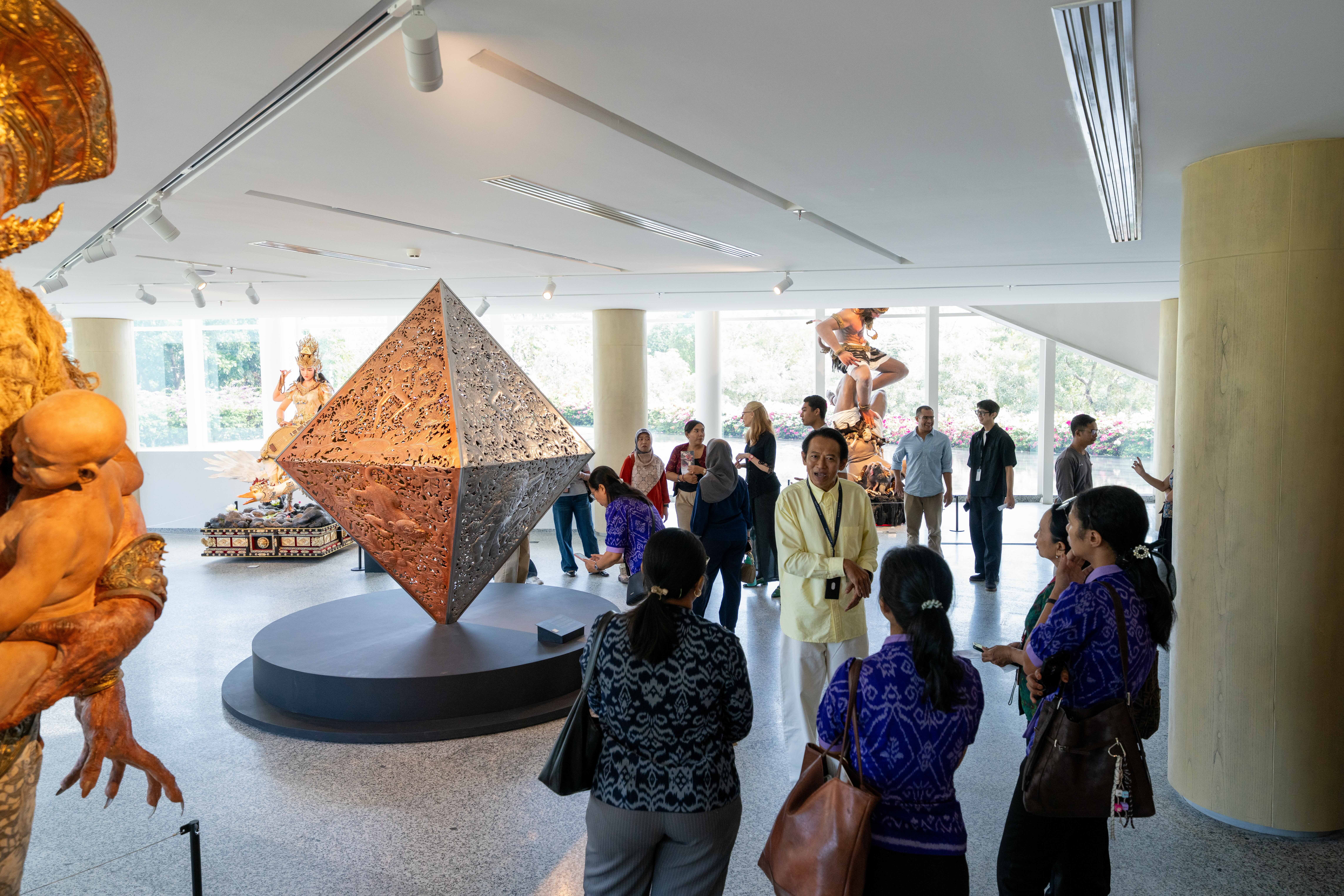
Rather than offering an exhaustive tour, the day selected a small number of encounters meant to spark ideas. In Subak: The Ancient Order of Bali, teachers explored subak not merely as irrigation but as a living network of farmers, temples, landscapes, and shared decision-making. In the Kasanga exhibition and auditorium, they moved through the rhythm of Bali's Saka New Year, from the energy of Pengrupukan to the stillness of Nyepi, and reflected on silence and restraint as dimensions of learning. At Palelintangan, many began with their own birth dates, only to find a complex system of time, character, and social memory waiting behind a simple, personal question.
What united these encounters was discovery. Again and again, teachers who have lived and taught in Bali for years found themselves learning something new about the culture around them, and imagining how that same sense of discovery might pass to their students.
One participant, Adija Johan of Marigold Community Learning, captured this hope directly:
"Having lived in Bali for 20 years as both a student and now a teacher, I was amazed by how much I still learned during my visit. Your collection is deeply inspiring. This experience has motivated me to create a special lesson about Bali for my students, and I cannot wait to bring them here for a field trip."
Enthusiasm like this led naturally to a practical question: how does a class actually work with the museum? The process is designed to start with the teacher. Rather than beginning with booking, teachers are invited to start with their classroom topic and learning goals. From there, SAKA works with schools to identify relevant exhibition connections before planning the visit.
This approach is now supported through forschools.sakamuseum.org, a dedicated planning portal where teachers can explore curriculum connections, understanding SAKA’s educational approach, and submit their class topic before arranging a visit. The portal was developed to support teachers during the planning stage, helping connect the museum visit with classroom learning before and after the visit.
Teachers’ Day also created space for discussion between educators and the museum team. Teachers shared the topics they teach, how they prepare students for learning beyond the classroom, and the kinds of support they would find useful. These conversations will continue to inform how SAKA develops its education resources and school programs. More than a list of practical needs, these exchanges pointed to something the museum and its guests already share: a common responsibility for education.
Dr Judith E. Bosnak, Director of SAKA Museum, put shared purpose into words:
“It is wonderful to welcome so many teachers today. We share a single purpose — the education of our community and our children — and the museum offers another way in: a place where culture and science, language and the reckoning of time all belong. Come and see it as both a home for cultural learning and a practical resource for how knowledge is kept and shared.”
Teachers occupy a vital place in the continuity of culture, introducing younger generations to inherited knowledge while helping them understand why it matters now. Teachers Day gave SAKA the chance to honour that role, and to begin building the kind of partnership in which museums and classrooms learn from one another.
The program marks a further step in SAKA Museum's commitment to sustained public learning. Every participating teacher carries the experience back to students and school communities, extending the day well beyond the museum itself.
When teachers continue to discover, every classroom gains a new horizon.

Follow SAKA Museum’s programs and events via @sakamuseum.
To plan your visit, purchase admission tickets, or learn more about the ongoing exhibitions, please visit: https://www.sakamuseum.org/
.jpg)
.jpg)
.jpg)
